

My son Zac is less than a year away from starting school.
And I’m not ready.
It’s not a mental thing. It’s physical. I’m not ready because I don’t have any plan for preventing the same thing that happened to me from happening to him.
Back to the Same Factory I Came From?
If you’ve been zagging with me for a while, you might remember my Fugawi philosophy, that intentional exploration beats following prescribed paths.
Fugawi comes from a Sopranos joke that’s been stuck in my head for 22 years:
Tony Soprano is filling his plate at the buffet of a Native American-owned casino and says to his capos, “Whenever I’m in one of these places, I remember that my grandmother was part Fugawi. Maybe I should do something about it.”
“Bullsh*t,” responds his slick sidekick, Silvio.
“’Oh no, it’s true,” retorts Tony. “They were a nomadic tribe. They wander around, they get lost, and they go ‘We’re the Fugawi’ [pronounced ‘where the fug are we’].”
Since introducing the Fugawi concept, I’ve realized two things:
- Fugawi aren’t some backwards tribe to be made fun of. They’re the MOST advanced.
The ability to explore intentionally, check your position regularly, and course-correct—that’s the crucial skill for navigating a world with infinite possibilities.
School should teach kids to be Fugawi. - The opposite of a Fugawi isn’t someone who knows exactly where to go. It’s someone who follows. Let’s call them Spostas—the “supposed tos.”
Spostas trudge along the path they’re supposed to without questioning whether it’s right for them. Spostas work hard at school. Spostas compete for praise and promotion at work. Spostas follow the financial plan for retirement… where they’re not Sposta do anything but relax anymore. And Spostas ensure their kids follow along. It’s not that these things are necessarily wrong. It’s that they were never consciously chosen.
I was a Sposta for 27 years, then it took me 12 years of deconditioning and training to become a Fugawi.
And now I’m supposed to send my kid into the Sposta factory I came from?
The Crack in the Matrix
On a sunny Tuesday morning in Geneva in 2010, I had to take time off work to get my broken nose looked at. As I biked across the city’s main shopping strip on the way to the doctor, something struck me. The street was busy. People of all ages, out and about like it was Saturday.
Didn’t these people have jobs or school?
…Lucky them.
…[Lightbulb flash.]
If they could make it their reality, why not me?
Until then, I’d been a perfect fit for the production line: school, University of Toronto Commerce, Procter & Gamble Corporate Finance. Easy. Smooth. I molded into what the system was designed to produce: a standard successful Canadian adult.
But that Tuesday in Geneva made the first crack in my polished veneer. The crumbling continued until, three years later, I fell off the production line’s rails entirely.
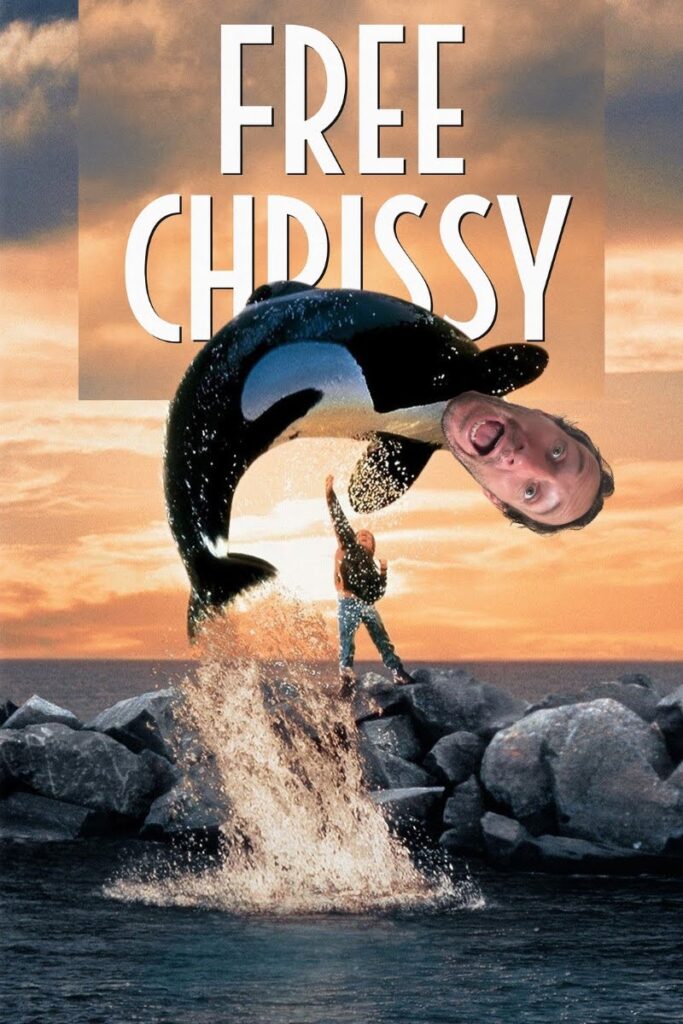
I felt like Free Willy out of the aquarium into the wild. I had to learn how to fend for myself and find my place in the ecosystem—all things my trainers at school never taught me.
In the adventurous but frustrating years that followed, I kept thinking:
Why did I have to figure all this out myself? Where were the guides?
Sure, my parents helped me enormously. But why wasn’t this part of my education? Isn’t preparing kids for adulthood the point?
What Are We Optimizing For?
The fundamental question most parents can’t or won’t answer is this:
What are you optimizing for in raising your kids?
The boilerplate answer: “I just want them to be happy.”
Well, I don’t. I want my kids to live what I call trifecta-filled lives. Life full of activities they:
- enjoy,
- look forward to, and
- feel proud of afterward.

That might sound selfish. But it’s also the surest path to contributing meaningfully to the world. So it’s selfish-less.
To design such lives, my kids need to understand their unique values and potential, and develop the ability to fulfill them within society.
So that’s my answer. That’s what I’m optimizing for as a parent. Same thing as I’m optimizing for myself.
School struck out on the trifecta criteria for me.
- Enjoy? Nope. Never did I think, “Yay, it’s Monday. Yay school holiday’s over.”
- Look forward to more? Heck no. I watched the clock in class waiting to be free.
- Feel proud of afterward? I have zero recollection of graduating. Just remember being glad to be done so I can move on.
Zero for three. Instead, my K through 12 years pounded into me a belief that life requires sucking it up and sacrificing. That fun and responsibility are separate. You grind through things you dislike to get to things you love. A solid strategy, I suppose, for schools that optimize for efficient production of “standard adults.”
But why would I choose to send my kids down those tracks?
“But what about socialization?”
“Socialization” is my reasonable friends’ number one defense of conventional school.
For most of my life, I agreed. I was proud to have gone to a public school with kids from all walks of life. I learned to interact with people I didn’t like and do work I didn’t want to do.
Now I think “socialization” is actually the number one reason I’m not in favor of conventional school.
- Age segregation isn’t socialization.
Why did my brother and I grow up on separate batches of the conveyor belt instead of learning together? In real life, we work and play across ages, learning and teaching each other. That’s what I want for my sons.
- Learning to suck it up and do stuff you dislike isn’t socialization.
There is a massive difference between discipline and submission.
School teaches kids to tolerate unpleasantness only when it’s mandated by an authority figure. I want my kids to develop the ability to push through the “dip” because they see the other side, not because they fear punishment.
- Following a rigid schedule isn’t socialization.
I don’t want my kids conditioned to split “school and work” from “life.” I want them to integrate it all.
- Being trapped isn’t the same as being resilient.
I want my kids to face real friction—losing a game, failing a project, getting rejected—not the artificial friction of asking permission to go to the bathroom.
- Playing predefined status games isn’t socialization.
School rewards GPAs and popularity. Life rewards outliers who wrap their lives around their spiky edges like superhero spandex.
Here’s what I actually want:
Something closer to the kind of upbringing kids had before industrialized schools. Multi-age relationships. Learning from elders and experience. Apprenticeship. Gradually assuming larger roles in society under the watchful eye of the community.
That’s not anti-social. That’s the MOST social.
True socialization prepares our children for real society, not pre-manufactured paths.
Maybe I’m being too harsh on conventional schools. But too many fellow parents lean too hard the other way with their “socialization” defense.
The Dark Cloud Threatening to Rain On Our Parade
For the last eight years, Kim and I have migrated between Vancouver and warmer places, mostly Cape Town. It’s not just about avoiding Vitamin D deficiency. It’s about building a life where, when the grass looks greener, we can jump the fence. It’s about not accumulating crap that weighs us down, but being forced to stay light by constantly packing up. It’s about the global perspective and cultural exposure. It’s about delicious, cheap wine.
It’s about intentionally pursuing a trifecta life.
School’s the approaching dark cloud on the horizon threatening to end that.
Sure, settling down has its plusses. More investment in the community. Less hassle planning and packing — and, if you smash those two words together, panicking. More professional “productivity.” Less expensive.
But I dread a 365-day-in-Vancouver lifestyle where our routine erodes into a rut too big to climb out of. Where Kim and I look forward to the freedom of becoming empty nesters, then look back wondering where the time went. Where we get accustomed to settling for too many anti-trifecta trade-offs—and teach our kids to do the same.
So we’re in Spain right now. Scouting cities with schools that optimize for something closer to what we want. Options are limited, but we found promising options, like LearnLife, that optimize for the same thing as us.
But just as I write this, we got an email: The LearnLife campus we loved is closing.
[Sigh of exasperation.] This is the trade-off. The Sposta path is rigid but stable. The Fugawi path is exciting but uncertain.
But I’d rather my kids see me fail trying to design an aligned life than never try and accept the default. Plus, the people who send their kids to LearnLife-esque schools share a similar Fugawi outlook. That’s the community I want for my family. So be it if the conventional crowd (and my younger self) thinks we’re weird.
Still, I wish it were easier. I wish Vancouver had more options—so much so I’m wondering whether I need to play a part in making it happen. Get involved with starting my own school or something.
Lots of doubts. But I’m quite confident that standard education is changing. Ten years from now, there will be more, better choices. And a generation from now, my grandkids won’t believe the way we old farts were brought up.
So if that’s where we’re headed, why not join the forefront rather than stay stuck in the past?
So… We’re the Fugawi
I hope what I’ve written doesn’t come across as too confident or dismissive.
I don’t have this figured out. I know the principles I’m optimizing for. But I don’t know if I can pull it off.
Maybe I’m wrong. Maybe I’m underrating ‘socialization.’ Maybe my kids will resent me rather than thank me for being “out there” and taking them off a standard track. Or maybe I’ll succumb to the lowest friction path and send them into the system I spent 12 years unwinding myself from.
I don’t know. Like I said, I’m not ready.
But I do know this: I’d rather be a Fugawi who’s lost on purpose and exploring intentionally than go back to being a Sposta marching down a path I never chose. And I want my kids to learn the Fugawi ways, too.
So maybe all this doubt is a good sign. Spostas don’t doubt. They follow. Fugawi stop and check, especially when something doesn’t feel right.
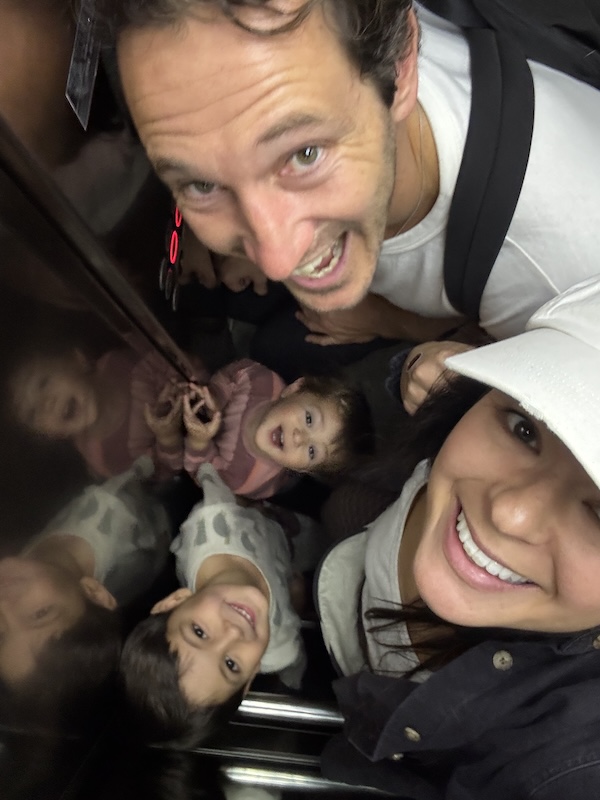
So whatever happens, my family and I will keep exploring, stopping, sniffing the air, and asking: “Hey guys, we’re the Fugawi.”
And we’ll course-correct as needed.
30-Second Summary
Conventional school teaches us to be Spostas—to follow the supposed-to path without questioning it. It took me 12 years to become a Fugawi—someone who explores intentionally and course-corrects when needed.
Now I’m supposed to send my kid into the same factory?
I think it’s worth articulating what we’re actually optimizing for as parents, and questioning whether “socialization” might be the worst argument for conventional school, not the best.
Teach Me
I suspect many of you are wrestling with similar questions—whether about school, career, or life design in general. And I want to know where you’re at.
So I’m asking you:
- What are you optimizing for? Have you articulated it explicitly?
- Where do you disagree with me? I want to be challenged. I might be wrong.
- What does ideal education look like to you?
Hit reply. Comment. Challenge me. Teach me.
And keep doing exciting things,
Chris
Society sands people smooth. I call it conformity waste.
The Zag is my running investigation into reversing it: decoding what makes you different and putting it to work. I publish what I find every 2 to 3 weeks. Zero spam.

About the author
I’m on an adventure developing better systems for understanding and designing around what makes each of us different. The Zag is where I share what I’m learning.
