

The French have apparently conquered August. Most of my podcasts and newsletters are reruns. My clients and collaborators are suspiciously quiet. Everyone seems to have decided they’ll be back in September.
My life is a perpetual summer, so I’ll keep chugging. But rather than waste a winter-worthy idea on checked-out minds, here are fourteen lighter things rattling around in mine.
Poke around. Maybe one is worth stealing your attention from berry picking, napping, or lemonade drinking.
Pick Where to Poke
- AI, The Great Mediocritizer
- Lonesome Dove
- Where Should Five-Year-Old You Grow Up?
- My New Fitness Fix
- Dear Kid in 2042
- Wealth Is Chucking Stuff
- AI Writing as Plastic Surgery
- Texture Slows Down Time
- FaveFinder Is Back
- Why Freeze the Status Quo?
- Wiki-me-dia
- Don’t Tell Me What Your AI Thinks
- Stop Watching Other People Play
- The Quote I Forgot to Credit
A Theory: AI Is the Great Mediocritizer
If you count on your favorite AI product for advice, writing, strategy, marketing, or therapy, it will drag you toward mediocrity.
Consumer AI products are trained on more or less all of humanity’s knowledge. They’re prediction-based and harnessed to protect the lowest common denominator user from inflicting damage on themselves and others. So with everything they do, they veer toward dull, average answers. But in a convincing way!
Even when I had Codex review this draft, it pushed me to not write “drag you to mediocrity.” It recommended I instead write LLMs “tend to produce consensus-shaped answers.”
Well, AI can take its “tend to” and shove it up its data centers.
As far as I can tell, standard AI products don’t take a spiky idea and sharpen it by default. They couch arguments, sand edges, and add caveats.
On the bright(-ish) side, the mediocrity AI pushes us toward is a higher level than before. So AI is raising and polishing the floor of mediocrity. Yay.
On the even brighter side, if you know what you want to sharpen and refuse to let AI take the wheel, it can turbocharge you. It’s like an Iron Man suit. But Iron Man suits are dangerous in deluded hands. So I guess mediocritizing by default is a feature, not a bug.
A Recommendation: Lonesome Dove
Now I appreciate “Wild West.”
Lonesome Dove transported me into a world I had never cared about or appreciated: the American West in the mid-to-late 1800s. Following cowboys driving cattle from Texas to Montana gave me a real appreciation for how tough and uncertain life was, how brutally death could arrive out of the blue, and how much has changed in 150 years.
A friend and I debated how someone from that era would fare if Back-to-the-Futured to today. Vice-versa wasn’t much of a question.
A Question: If You Were Five Today, Where Would You Want to Grow Up?
You get the same family you grew up with, but can be raised in any neighborhood in the world. Where would you want it to be?
I’ve asked pretty much everybody I hang out with these days, for the last couple of months.
My answer?
Not Vancouver. I’d want to be somewhere where I have freedom to roam around with a gang of neighborhood friends (see this podcast episode). But I’d also want solid infrastructure – schools, sports, etc – to prepare me for life by cultivating my spikiness. My initial impulse was somewhere like Byron Bay in Australia. But that may overweigh the importance of weather. I don’t remember caring about rain or cold until I was grown-up. So maybe somewhere in Scandinavia? I’ve only been to Copenhagen and Helsinki for a weekend each, so don’t know the area well enough to say.
Another heuristic: Where do kids grow up and most often return to raise their own families?
A Moving Recommendation: My New Fitness Fix
Last November, a nagging lower-abdomen injury forced me to give up beach volleyball and other exercises. Not wanting to sit around and do nothing but also not wanting to make my injury worse, I started doing YouTube mobility videos to develop practical strength and mobility for functional purposes.
EDR Fitness’s free 40-day program was a fantastic start to 2026. For the spice of life, I sprinkle my rotation with:
- Tom Merrick – more relaxing and mobility-focused
- Julia Reppel – same as EDR
- LeoMoves – good workouts
- Strength + Flow – this is a challenging one
- This 12-minute, 13-million-viewed routine promising you’ll never have back pain if you do it daily.
I consider myself in the top 10 percent of fitness (certainly for my age), and find many of these challenging enough, though some are more accessible and designed for rest days.
An Idea Worth Borrowing: Write Birthday Letters Your Kids Will Open at 21
h/t to Patrick O’Shaughnessy, who passed along this idea from his own dad:
Write your children a letter on every birthday for them to open when they’re 21. Share your thinking, what’s going on in your life, and what you hope they’ll remember when they officially become adults.
I tried it for the first time with Zac when he turned five in April. It was surprisingly emotional to think of life 16 years from now, Zac as an adult looking back at this moment when he’s five, Sandy is three, and Kim and I are young(-er). Their childhoods are still in front of them. My Legant work’s “childhood,” too. Major prostalgia infusion (feeling nostalgia for the present).
My family’s present context feels vivid now, but 16 years from now it will have faded into blurry, distorted memories. Capturing the silly details is valuable to me today and may be valuable to my kids later, or at least to their AI agents. I hope it broadens their perspective of time, refines their life stories, strengthens our connection, and is a super entertaining read. We’ll see.
I’ll report back in 2042.
A Thought: Wealth Is Being Able to Chuck Stuff
Or donate it, because chucking stuff is wasteful.
Migrating between Cape Town and Vancouver means repeatedly looking at things in storage and asking, “Do we really need this?” We keep it just in case. It would feel wasteful to get rid of it.
But then at least twice a year we just move that crap around and ask the same “Do we need this?” question. So it lives rent-free in our heads, and in our storage.
True wealth would be the ability to get rid of it. If I need new boxing gloves, snow boots, or rollerblades, I’ll buy them. And if more people joined in, there’d be more to choose from on Marketplace.
An Analogy: AI Is the Plastic Surgery of Writing
For 99 percent of us, our raw writing is not especially beautiful. So when free plastic surgery comes along, it seems crazy not to give it a shot. You see the output and think, “Wow. So much more polished. So much more attractive.” So much easier, too!
So you do a touch-up here and there. Then a little bit more. Before you know it, your writing is Hollywood has-been-ishly unrecognizable. You think it looks great. Maybe superficial readers who skim the surface don’t mind the artificiality. But those relationships aren’t the ones that are worth writing for.
I say this having gone through it and come out the other side. I’d rather my writing be somewhat ugly and mine than superficial and similar to everybody else’s.
AI can help with my makeup.
A Working Theory: Texture Slows Down Time
As much as I endorse radically moderate progress, if your life is a steady climb, time goes by faster and faster. Plus it’s boring. So I’ve realized it’s important to add texture to the trajectory by intentionally mixing in the odd tent pole.
My theory: Our perception of the pace of passage of time depends on how quickly we can scan backward through our past. If the path is smooth, you can zoom backward and forward lickety-split. Tent poles create speed bumps.
I’m happy with the texture of my parenting life. People say time flies with kids. But maybe that’s because they pull you toward a smooth routine. I’ve tried to venture off those paved paths and seek adventures. Rather than go to the same parks or beaches, head in new directions, often without a plan, and see what happens. Camping trips are great too, and affordable. And of course moving around between Cape Town, Spain, Australia, Costa Rica, Brazil has been a great privilege. My past five years as a parent have felt long. There’s been a crazy amount of texture.
Where I’m missing texture is professionally. I need more adventures that don’t throw me off course but make the climb more memorable.
A Resurrection: FaveFinder, My DIY Movie Recommendation Engine
I’ve always had a hard time picking movies to watch. I practically spend more time deliberating and watching trailers than watching the movie itself.
Recommendations from Netflix, Amazon and the like suck. You don’t know what data they’re using, their incentives aren’t aligned with yours, and their recommendations go haywire if someone else gets access to your account.
So back in 2016 I started creating my own recommendation engine. I called it FaveFinder.
I ranked and rated the movies I’d seen, then compared my profile against movie critics’. The closer someone’s preferences were to mine, the more weight FaveFinder gave to movies they loved but I hadn’t seen.
It worked better than any alternative. I even made a website. A couple dozen friends and a handful of randos who somehow found it gave it a shot. But I eventually let FaveFinder go fallow because of the effort it took to manually import critics’ reviews each week.
AI agents see that “effort” and snort at my human feebleness. They can collect and maintain way bigger databases in their sleep (or at least mine). So FaveFinder is not just resurrected, but better than ever. AI does all the dirty work. I do the fun stuff: tinkering with the algorithm while I watch enjoyable movies.
A Thought Experiment: If You Wouldn’t Reverse It, Why Freeze It?
In my neighborhood of Kitsilano, there is much ado about rezoning that allows for more high-rises. Some objections make sense to me, like that towers would block the southern sun. But would these same people be on-board with tearing down the apartment buildings they live in to put back the houses that used to be on that land? Or go all the way back to forest?
More density: bad. Less density: also bad. So Vancouver’s reached perfect density? Bad.
The same bias applies to a lot of decisions.
- If I already worked at a consulting firm making a couple hundred thousand dollars a year, would I quit to make no money doing what I’m doing now?
- If I owned a two-million-dollar half-duplex, would I sell it to invest that cash and rent my place?
If I were already there, would I want to go back to my current status quo?
A Project: Wiki-me-dia
This grab bag is partly an output of my personal Wikipedia of myself.
Since 2015, I’ve been logging my life and summarizing those logs into weekly, monthly, quarterly, and annual reviews. Since 2025, I’ve also transcribed and debriefed most of my work-related calls with Granola. More recently, I’ve had my AI agents trace and organize their work too. And, as the #1 client of Innate Edge, I have my personal operating manual and all the data that feeds it.
All this information now sits in a Google Drive folder. Different AI models can use it in myriad ways I’m too naive to care about that violate my privacy access.
Building on Andrej Karpathy’s suggestion, I’ve instructed my agents to map it in a pyramid-type structure so agents can drill into the details as much as necessary for a given job.
I’m the boss, though. So I decide what deserves to sit near the top: my operating manual, what went well and what didn’t, where I want to head. And after every call and month/week/year I still manually recap what mattered.
The result is more than a database. It’s a navigational system. Agents help me not go in circles, find things I’d forgotten, spot patterns I miss, and pull together a grab bag of preoccupations for a newsletter.
A Pet Peeve: Don’t Tell Me What Your AI Thinks
It grates my cheese and makes it stinky when I’m discussing/debating a topic with someone and they defend their side by saying, “well my AI said so and so.”
(Full transparency: I’m a recovering serial offender.)
By all means, go ahead and use AI assistants to prep. In fact, AI has gotten so easy and effective that it’s getting close to the point where, if someone rocks up willy-nilly to a meeting with me, I get a bit offended. Why not get your AI assistant to read our emails, recap our past sessions, do some diligence, and make suggestions? My time is less valuable than your AI’s? Let’s talk about topics our AIs can’t answer.
But let’s not talk about what your AI says. I expect anyone I meet with to be the boss of their opinions, not to outsource it to their mediocritizing assistant. If I want to know what AI has to say, I’ll ask it myself.
A Provocation: Stop Watching Other People Play Games
My friend’s friend recently became worth tens of millions when SpaceX IPO’d. This got me asking him, then others what they’d do with that kind of money.
One relative said he would retire, hang out, play golf, and watch tons of sports. That’s close to the antithesis of what I’m working toward. The sports watching part seems especially wasteful. Why spend your life watching other people play games?
Not that I’m waste-free. I listen to multiple hours of NBA podcasts a week and check ESPN every day. But have those hours contributed to anything I’m proud of? No chance. What I’m actually proud of is that I went cold turkey on the NFL in 2021.
Business, politics, news, movies, and books are largely other people’s games, too. There is certainly a place for a slice of them. For instance, sports fandom is a socially acceptable way for men, especially, to bond. But it’s worth asking: Does this support the game you want to play, or substitute for playing one?
If I had zero interest in the NBA today, would I force myself to become a fan?
The less you know what your own game is, the more interesting other people’s games become.
A Quote I Forgot to Credit
“It is amazing what you can accomplish if you do not care who gets the credit.”
The quote has stuck with me for a couple of reasons. First, I suspect it partly explains my lack of accomplishment. My compulsion to design my own frameworks/methods/terminology leads to me giving not enough credit to whomever I derived my ideas from. Second, it gels with my plan to move away from trying to sell my own thing and toward being more of a back-end developer of a methodology that others can use, benefit from, and take the credit for.
So thanks to whomever introduced the quote to me. I don’t remember who it was. Clearly they’re an expert at living up to the words.
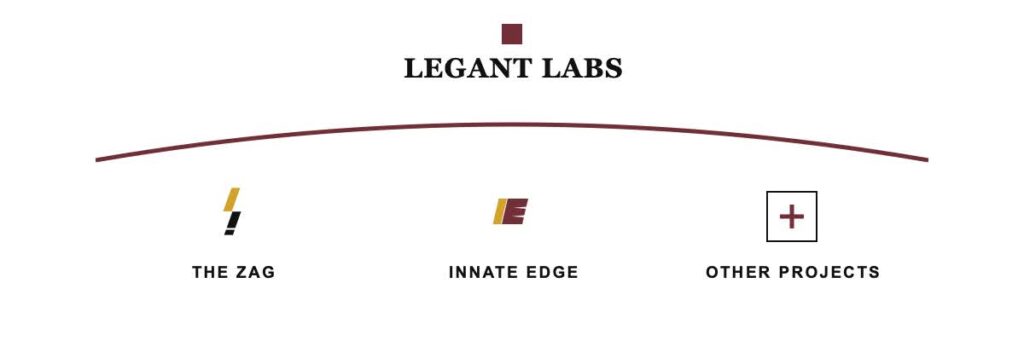
An Update: Legant Labs
I’ve retired the ARC acronym and moved The Zag, Innate Edge, collaborations such as The Override, and whatever comes next under a new (sun) umbrella: Legant Labs.
Legant is an anagram of tangle, because the work is about untangling people and their circumstances to find alignment.
This is a move to better align myself. I want to focus on my game: researching and developing the Legant Method. I can team up with people who kick butt at building, selling, and delivering its different applications. The mission remains to raise humanity’s spiky ceiling above its standardized floor. If we can accomplish it, I don’t care who takes the credit, or even the lion’s share of the money.
Society sands people smooth. I call it conformity waste.
The Zag is my running investigation into reversing it: decoding what makes you different and putting it to work. I publish what I find every 2 to 3 weeks. Zero spam.

About the author
I’m on an adventure developing better systems for understanding and designing around what makes each of us different. The Zag is where I share what I’m learning.
