

What’s the word for the opposite of hollow? Solid on the inside, empty on the outside. Whatever it is, that’s the word for my professional progress last year.
The successfully dense inside?
I helped my founding Innate Edge clients decode what makes them different.
The empty exterior?
Nobody could figure out how to do anything different with that self-understanding.
So when I surveyed my first fifteen clients, they all came back with the same feedback:
- “it stops a bit short… the world is still organized to converge on conformity.”
- “the toughest part for me is having the discipline to make new realizations a reality”
- “I may know myself better, but not really seeing how I’ve changed.”
A chorus of, “Cool. Now what do I do with it?” They know what makes them different, but don’t know how to package themselves for others to understand, let alone make use of it.
This explains why you haven’t read any inspiring case studies from me. Even worse, I realized, it explains why my own case study hasn’t inspired you.
Nobody Cares to Read Your Manual
If you can’t explain to people why what makes you different matters to you them, they’ll yawn and put you into boxes you don’t want to be in.
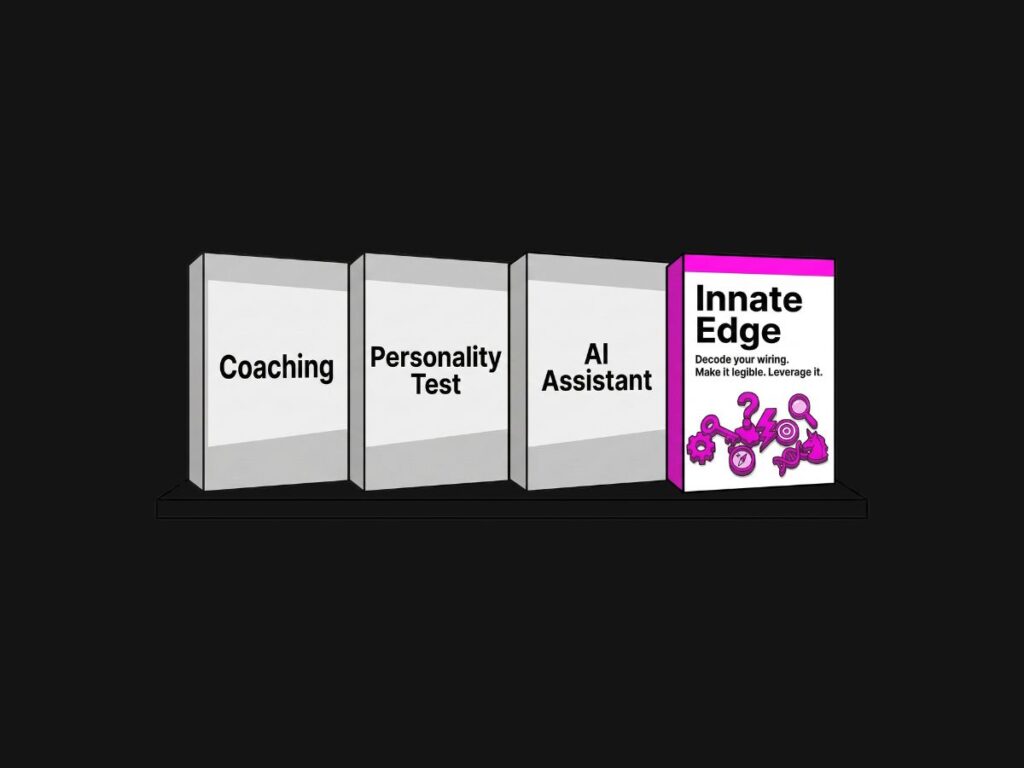
In my case, people constantly but inadvertently get on my nerves calling Innate Edge a “coaching program.” Or “kinda like Myers-Briggs.” Or, worst of all, “cool, I do the same thing with my ChatGPT.”
No!
But instead of packaging myself into something easy for you to understand, I’ve been pointing everyone to a 150-page Google Doc with my methodology. I’m basically saying, “Read all this, be very impressed by its intricacy, then figure out for yourself why you need it.” Then I wonder why nobody lines up.
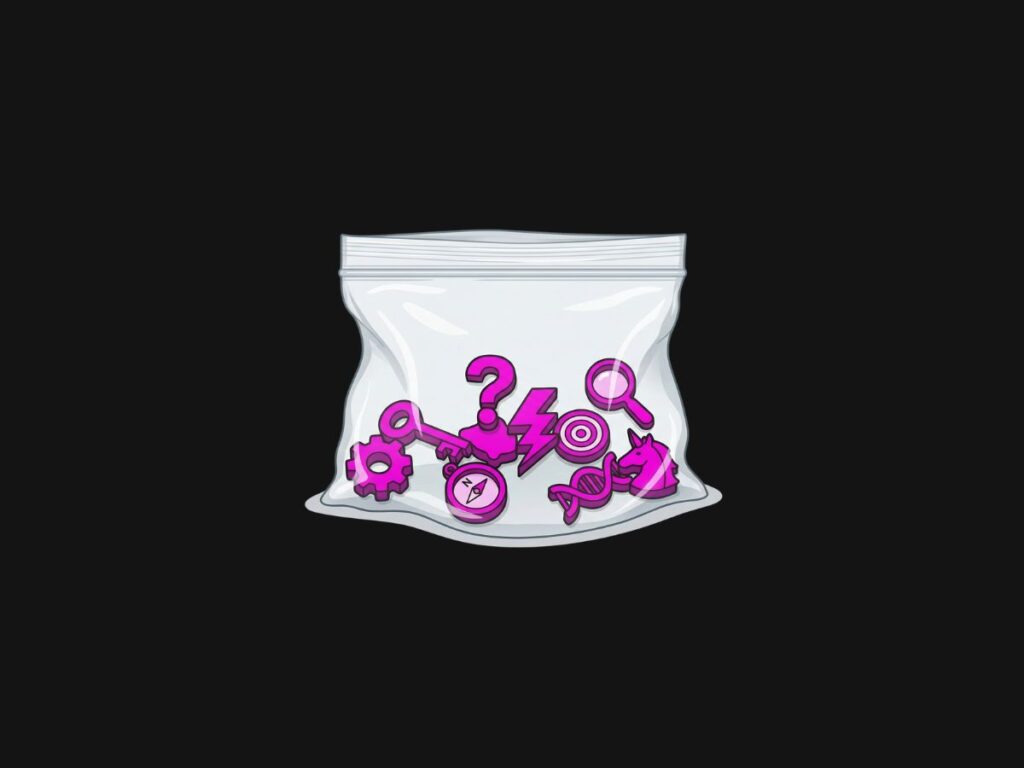
One person who showed up despite my see-through plastic bag packaging was Taylor. After finally wrapping her head around what I actually do, she said, “I almost feel like you help people market themselves.”
Yeah! I do. Except I didn’t. I’d only helped people market themselves to themselves. Now how do I help them market themselves to others?
People Need Positioning, Too
So I pulled up my notes from a book I’d read years ago, enjoyed, and done nothing with, Obviously Awesome by April Dunford. Her frameworks position products. Could they also position people?
Dunford’s fundamental question: If your product didn’t exist, what would your buyer use instead?
Reapplied to individuals:
If you didn’t exist, what would the people you want to serve turn to instead?
My instinctive answer:
“Nothing, because my Innate Edge methodology is unlike anything ever seen before.”
Dunford would snort. People need contrast to understand. So she’d ask:
- What shelf do you want to be on, i.e., What other products do you stand beside?
- Who desperately needs this and will pay?
- How does your product offer different results?
After a year of decoding myself and fifteen clients, I had what I needed to answer these questions.
So I packaged my 150-page methodology into a positioning report for internal reference and a landing page for the world to see.
Packaging the People
Then I moved on to testing this packaging framework on my willing (and unwilling) clients who I’d decoded but left feeling naked without a package.
- A strategy consultant repackaged as a Value Activator PE firms call when a portfolio company should be performing but isn’t.
- A financial professional repackaged as an Independent Capital Strategist growing companies call after their first bank meeting leaves them realizing they’re in over their head.
- An urban planning expert repackaged as an Urban Risk Strategist whose methodology wins cities millions in federal grants and avoids millions in preventable damage.
And Innate Edge? The unwieldy 150-page methodology became: I decode your wiring and make it legible so you find your fit and build something extraordinary. Product-market fit for individuals.
Make Your Awesomeness Obvious
Soon I won’t have to settle for nebulous stories of internal clarity for my case studies. I’ll share my clients’ packaging: their businesses, websites, LinkedIn pages. It will be obvious what makes them different.
But don’t wait for me. Start with Dunford’s question:
If what you offer to the world didn’t exist, what would the people you’re best equipped to help use instead?
Decode what makes you different. Then package into an offer that, for the right people, is obviously awesome.
Keep doing exciting things,
Chris
PS – If you’ve got more in you than your current trajectory reflects, want help figuring out your positioning, and feel your situation is especially tricky, reply to this email. I’m looking for some new challenges.
Society sands people smooth. I call it conformity waste.
The Zag is my running investigation into reversing it: decoding what makes you different and putting it to work. I publish what I find every 2 to 3 weeks. Zero spam.

About the author
I’m on an adventure developing better systems for understanding and designing around what makes each of us different. The Zag is where I share what I’m learning.
